Clients do not usually lose patience at the moment a delay appears. They lose confidence when the original date is close, nobody has said anything, and they begin to wonder whether they are the last person to know.
Waiting two extra days does not have to damage a working relationship. Making a client infer the risk from silence is what turns a small delay into a question of reliability. The difficult part of a delay email is not finding a stronger apology. It is offering a plan someone can actually use.
What a client needs is a new plan they can rely on
“We will finish as soon as possible” sounds courteous, but it gives a client nothing they can use to arrange a review, launch, or meeting. A confirmed new date, one delivery-related reason, and a note about what remains on schedule will usually do more than a long explanation.
There is a boundary here. Clients do not need an internal postmortem, and they should not have to reassure the sender. One direct apology and a new arrangement are enough. When a delay causes a real loss, the person responsible should propose how to address it rather than asking the client to decide how serious the problem is.
A tool should not turn uncertainty into a promise
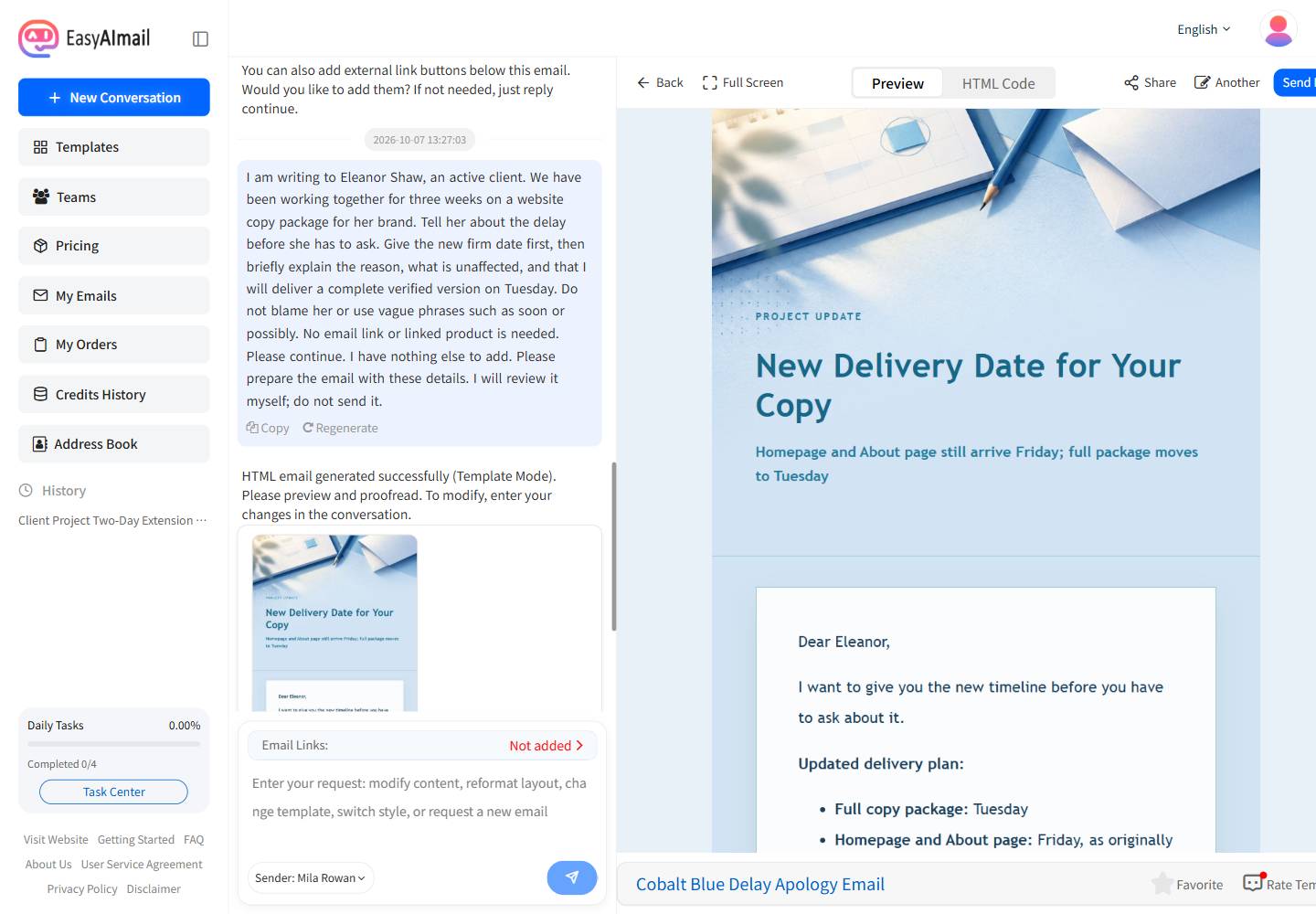
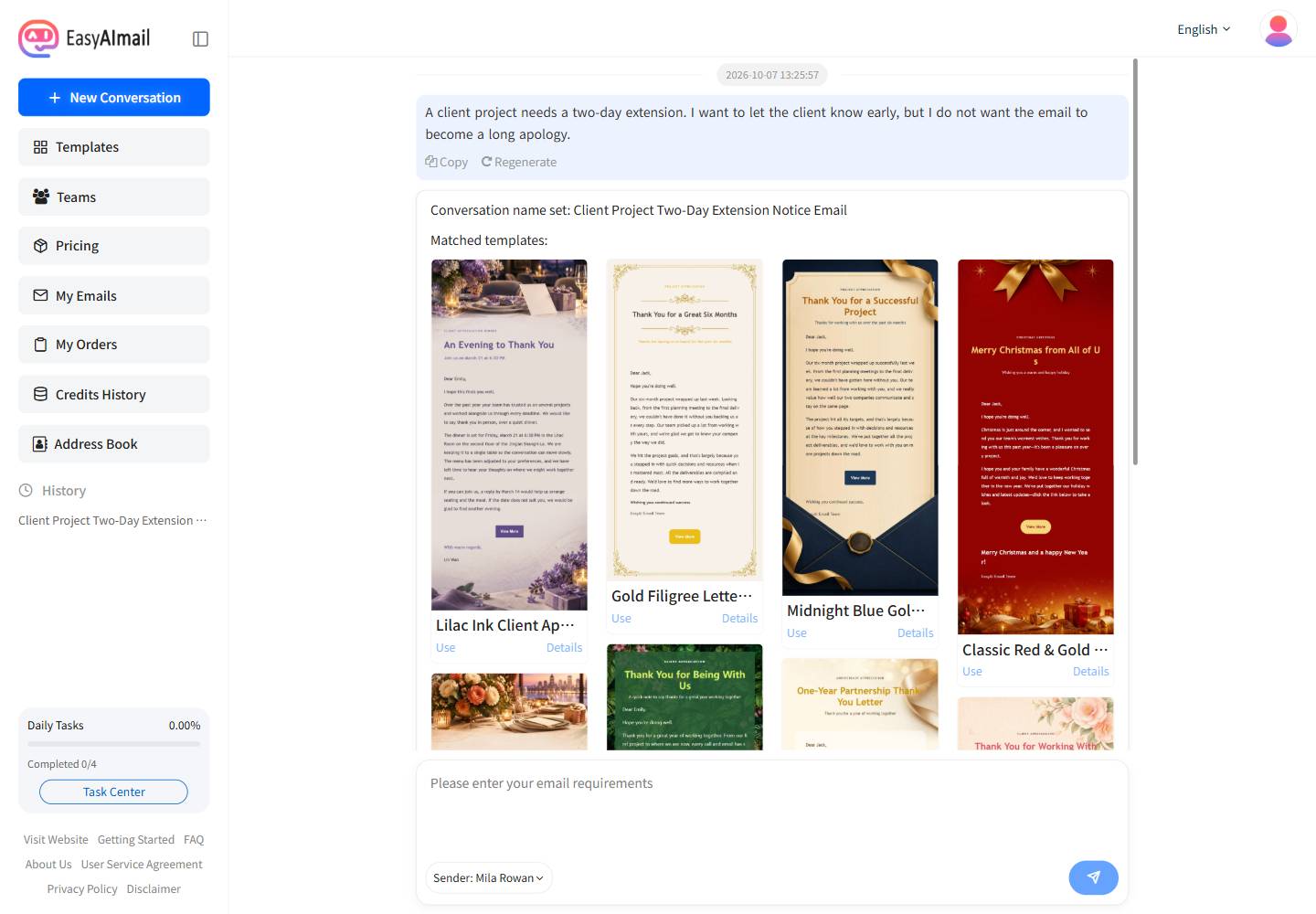
In an EasyAImail conversation, a user can explain the recipient, original delivery, confirmed new date, affected scope, and intended tone. AI can organize those facts into a draft, ask for missing information, and keep the tone formal, friendly, or personally described. It should not make an unconfirmed date sound certain merely because the email needs to sound positive.
Nor should fluent wording cover a fact that has not been settled. Removing stiff or generic language is not the same as making a risk look better. The sender still needs to check the date, scope, and next step before deciding whether to send.
Speaking early does not make the problem bigger
It is tempting to wait until every uncertainty has been resolved, especially when an early message may worry a client. But once the original date will not hold, silence does not protect the relationship. It only leaves less time for the other person to adjust their plans. Saying so early gives some of that choice back.
That is why a useful delay note does not read like an excuse. It does not ask the client to absorb the sender’s anxiety. It states a plan that can be checked. For the practical email structure, read how to tell a client about a delay. For the boundary between facts, tone, and human review, read how to choose an AI email tool.