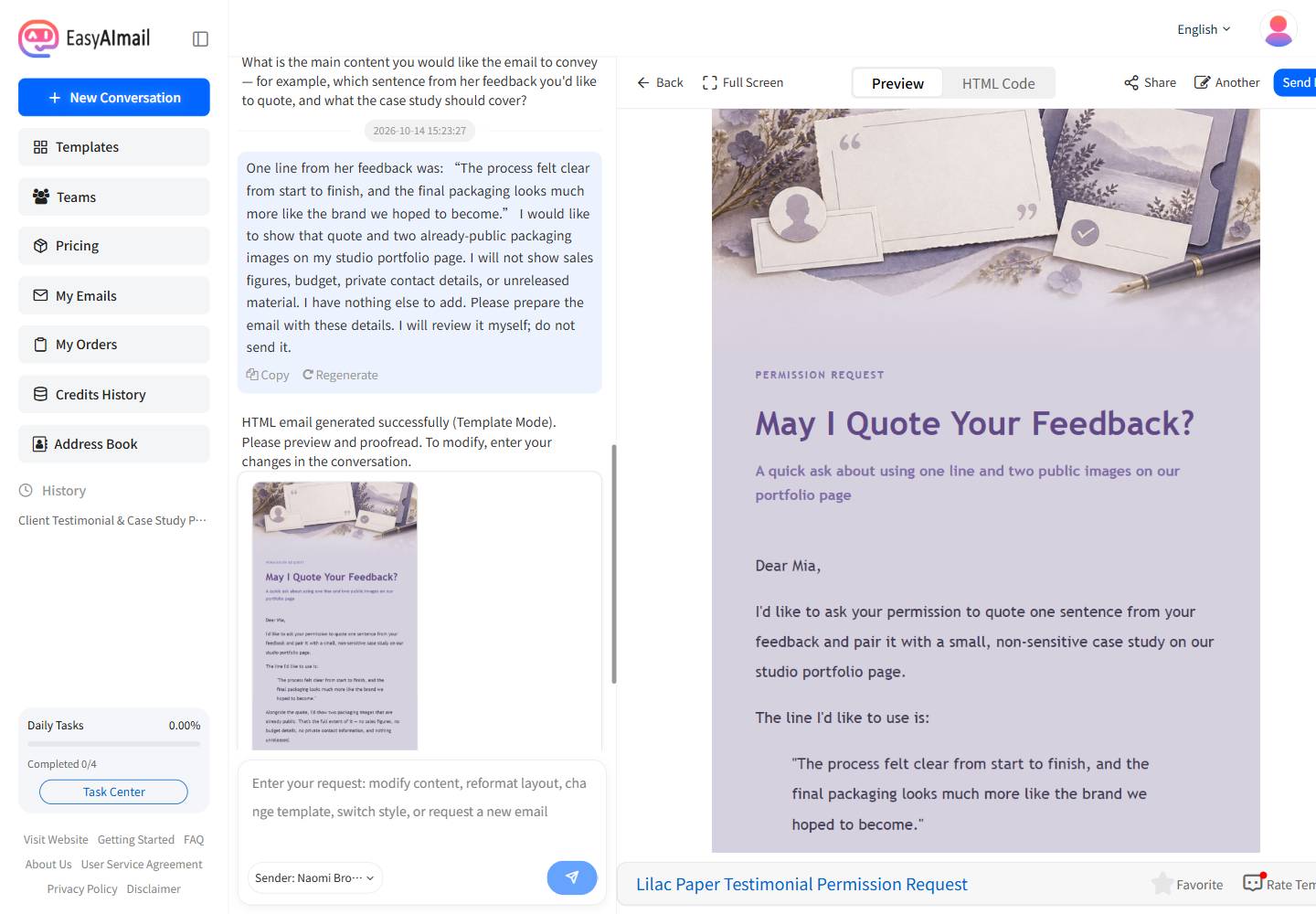
When a client sends a generous note, it is natural to imagine it on a website, portfolio, or future proposal. The easy-to-miss part is this: someone choosing to say something kind to you does not mean they have agreed for strangers, search engines, and future clients to see it too.
This is not being overly cautious. Publishing changes the context. Private praise can be light. A public quote beside a name, brand, or project image brings a different kind of attention. The respectful response is to let the client know how you hope to use it.
A review and permission solve different problems
When a client leaves an honest review, they are sharing an experience. When you ask to publish a quote or show a case study, you are asking whether that experience can be connected to their identity, project, or brand in a new setting. Both rely on trust, but one agreement cannot stand in for the other.
That is why “May I use this?” is often too thin. The client needs to know which words you would quote, whether they would be edited, where they would appear, and what will stay private. The clearer the scope, the easier it is for someone to give an informed answer or approve only the part they are comfortable with.
A tool can clarify the scope, not turn silence into permission
In EasyAImail, a user can explain the feedback, project material, intended public locations, credit options, and choices they want to leave with the client. AI can organize those details into a measured request and ask about missing scope. It cannot assume approval, and it should never treat no reply as consent.
Natural wording matters, but it should not blur a boundary. The sender still needs to check the real agreement, privacy requirements, and intended use. Public sharing belongs after clear permission, not before it.
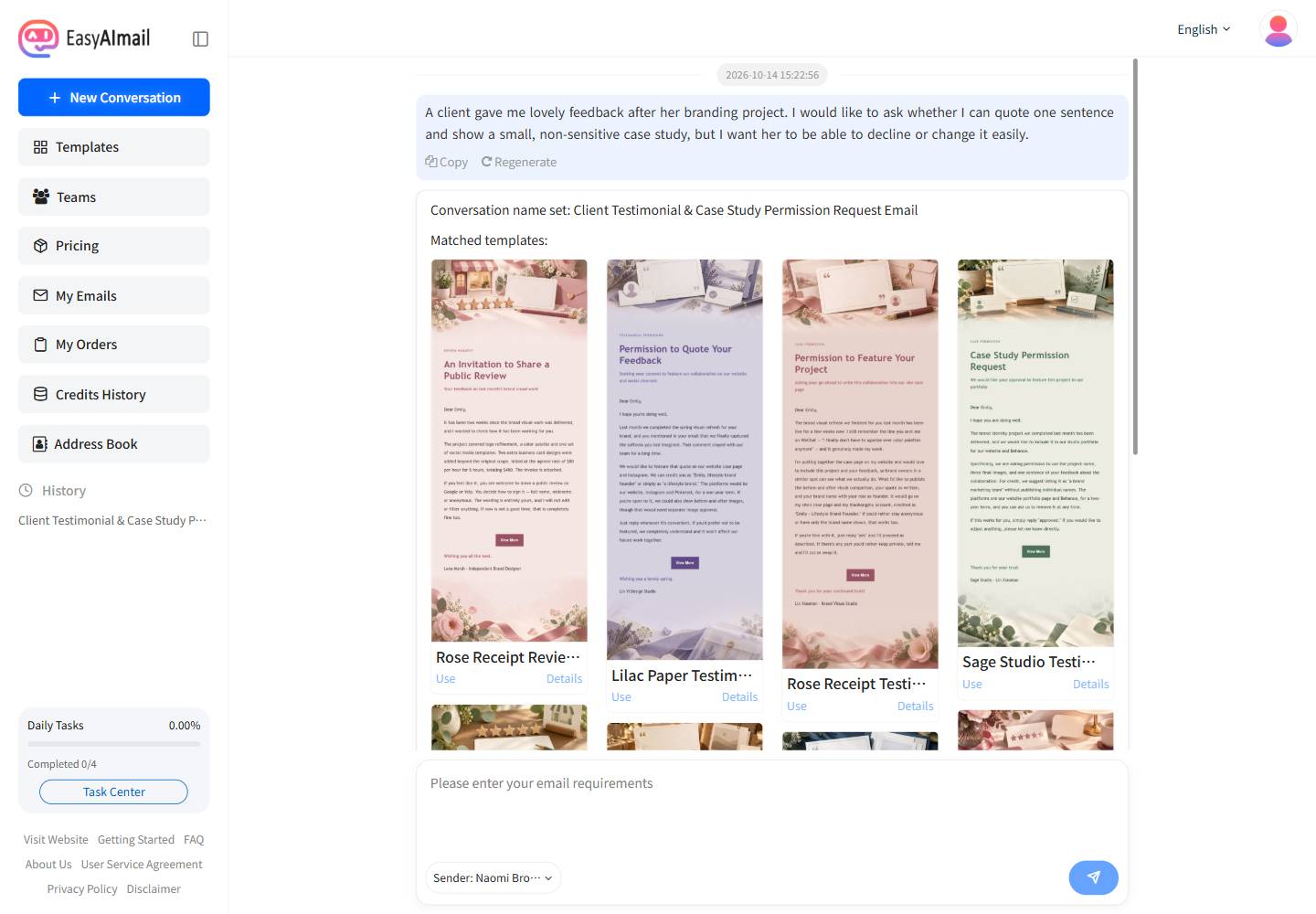
Leave room for more than one answer
A good permission request does not only make room for a simple yes. A client may be happy to be anonymous, happy to approve a quote but not an image, or want to revise the wording first. Offering those paths does not weaken the request. It shows that the goal is not to collect a marketing line, but to use someone else’s trust correctly.
If a client has not yet shared public feedback, start with asking a happy customer for a review without sounding pushy. When you want to use feedback on a site or case study, see how to ask a client for permission to use a testimonial or case study for the practical structure. Before sending, check that the actual use and permission still match.