
One of the most common requests in an email tool is only a sentence long: “Help me ask about the interview.” It is easy to understand, but it is not yet enough of a situation to support a good email. Behind it are a relationship, a promised next step, a timeline, and a real expectation.
While reviewing post interview communication scenarios recently, we found that the useful work was not making that sentence sound more formal. It was noticing what the request left out. If a tool generates too soon, it can only make anxiety sound smoother. Once the context is present, the draft can begin to match the actual situation.
An update request is missing five facts
Who is receiving the message? What next step was discussed? How long has it been? Has there already been a follow up? What does this message need to clarify? These details can appear scattered, yet they determine whether the email has a sound basis.
In one test conversation, the candidate had interviewed, the employer had mentioned another round and asked about availability, ten days had passed, and a polite check in sent five days earlier had not received a reply. The useful work was not finding a softer way to say “chase this.” It was giving those facts their proper order.
A tool can organize facts, not explain silence
A quiet hiring process may involve scheduling, approvals, shifting priorities, or many things a candidate cannot see. A tool does not know what silence means, and it should not pretend to know. It can put the facts, relationship, and intended tone into one reviewable draft.
That is why EasyAImail uses a conversation to collect context. A user can add who the email is for, the occasion, what they want to say, the desired tone, and any fixed details such as dates, names, or companies. The tool can ask and organize. It does not speculate about the other person’s decision.
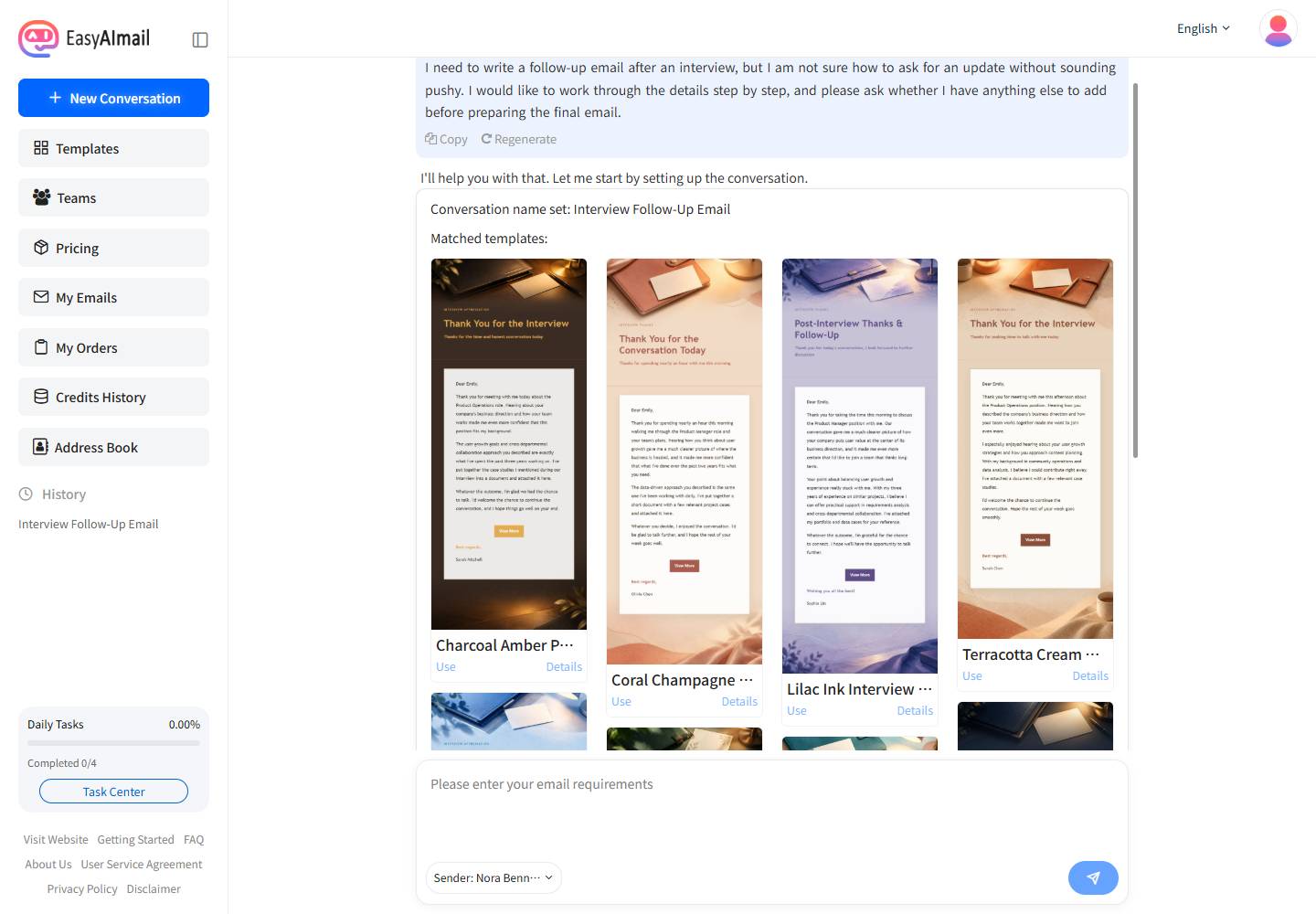
A template sets reading order, not judgment
Once the background is clear, the user can inspect relevant template details and choose a layout personally. The template helps a recipient find the context, important facts, and request. It does not decide whether a recruiter should reply or whether the sender should continue waiting.
That boundary matters. A calm layout can reduce friction in the message, but it cannot turn uncertainty into a conclusion. Choosing a template is choosing how information will be read, not handing the decision to a tool.
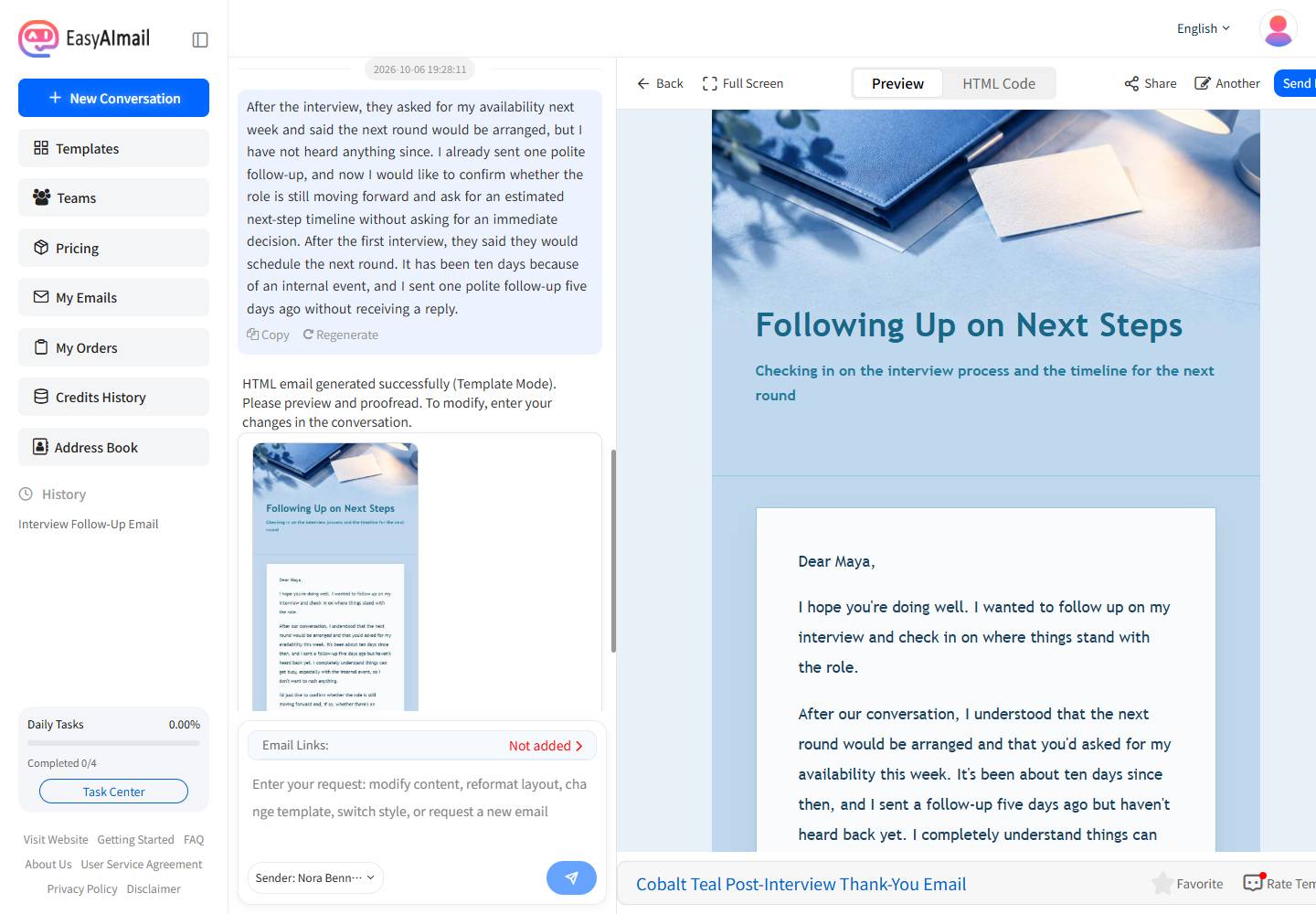
The sender still makes the call
A generated result should be a draft to review, not a system that sends on someone’s behalf. The user still checks names, dates, process details, and their real intention. They also decide whether this is the moment to contact the other person. Polished wording cannot take over that final judgment.
For a closer look at structures for different email situations, browse our email template collection. For more on the boundary between facts, tone, and generation, read our guide to choosing an AI email tool.