
When a customer asks for a refund before delivery, the visible question is whether they can cancel. The question underneath is often basic: where is my order now, and can I trust that someone is handling it? Treating the reply as a refund negotiation from the first line can push the relationship into opposition.
What makes this moment tense is not the word refund by itself. It is uncertainty. The customer may not know whether the order has shipped, when an update will come, or whether their options will be taken seriously. A useful reply first brings that suspended state back into something understandable.
What they usually want is certainty
If a business begins by explaining shipping or emphasizing policy, the customer can feel as though they are arguing with a paragraph. A better email does not need to rush into keeping the sale. It first makes the real status visible: what is confirmed, what is still pending, and who will handle the next update.
Cancellation or a refund can be a choice that is respected, but it should not become a performance designed to retain business. Whether an order has not shipped, has shipped, or needs further checking should come from the actual order information. A writing tool cannot decide refund eligibility or make an unknown delivery status sound like a promise.
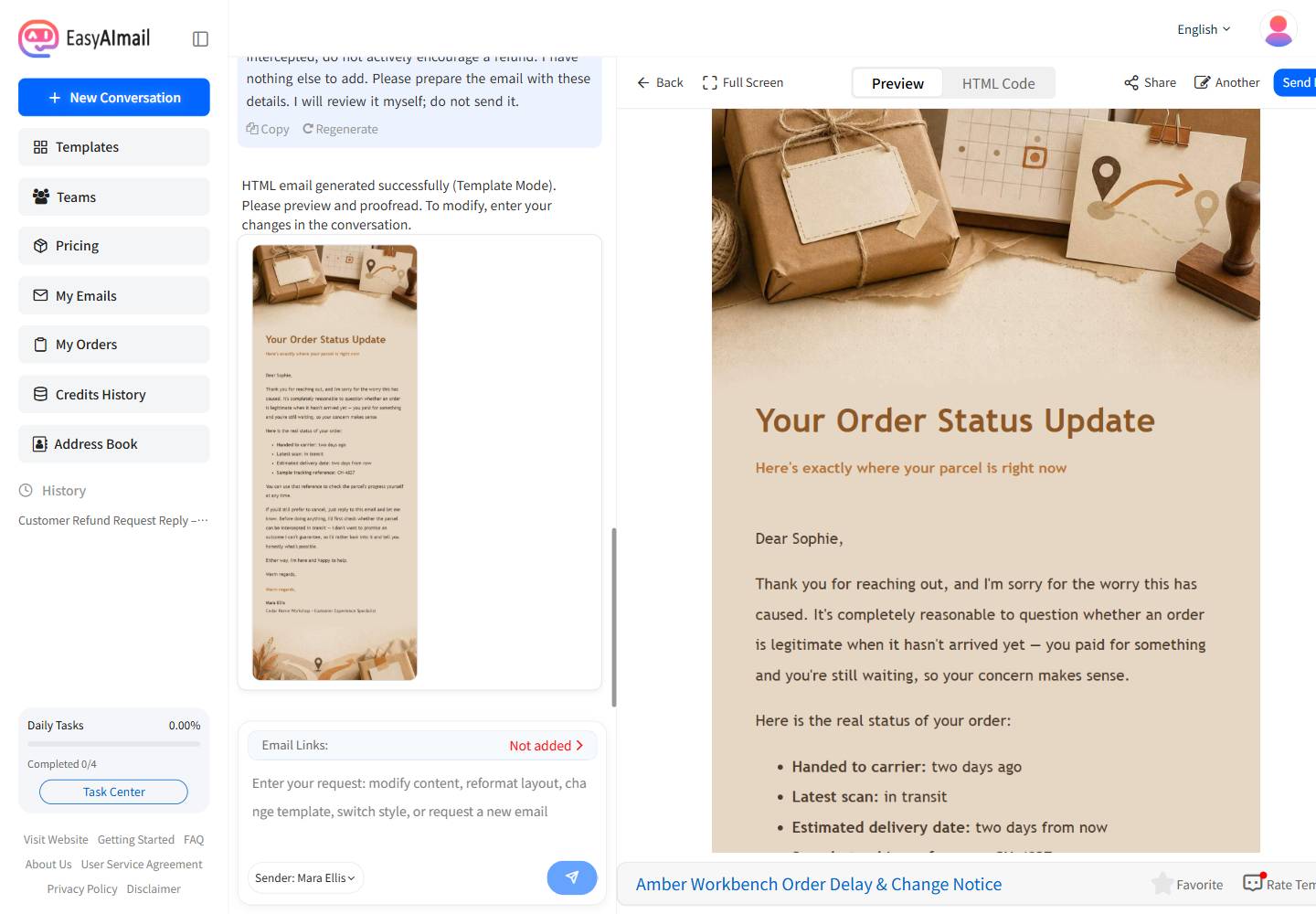
Separate facts from tone before drafting
In an EasyAImail conversation, users can explain the recipient, the order status, what they need to resolve, the desired tone, and any times, amounts, or order details that must remain exact. The tool can organize those details into a draft to review and recommend suitable templates. It does not decide refund policy or take responsibility for the next operational step.
This is not only about making the email sound more polite. Once the facts are clear, tone can do useful work: recognize the customer’s concern without inventing an apology, explain the next step without promising an impossible time, and present options without making them feel engineered.
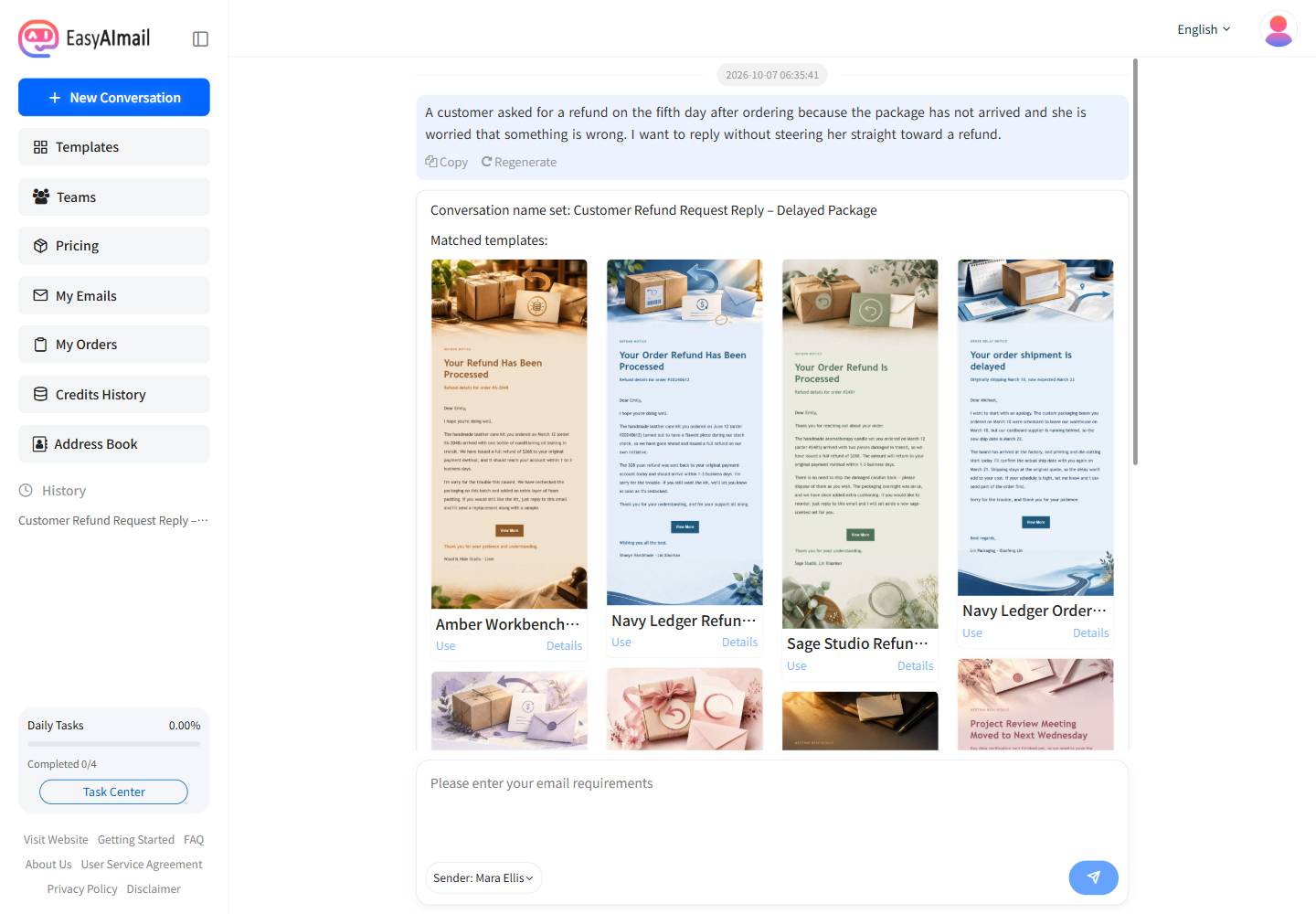
Trust stays with what can be checked
A customer may not change their decision because of one email, but they will notice whether the situation was explained clearly. What steadies the relationship is not a longer explanation. It is an order status they can verify, a clear path for handling the request, and an action that is later carried out.
For the practical structure of a reply, read how to respond when a customer asks for a refund before delivery. If the issue has become a complaint, see how to write a customer complaint apology email with a real next step. Check the order facts before sending, then let a person decide the next action.