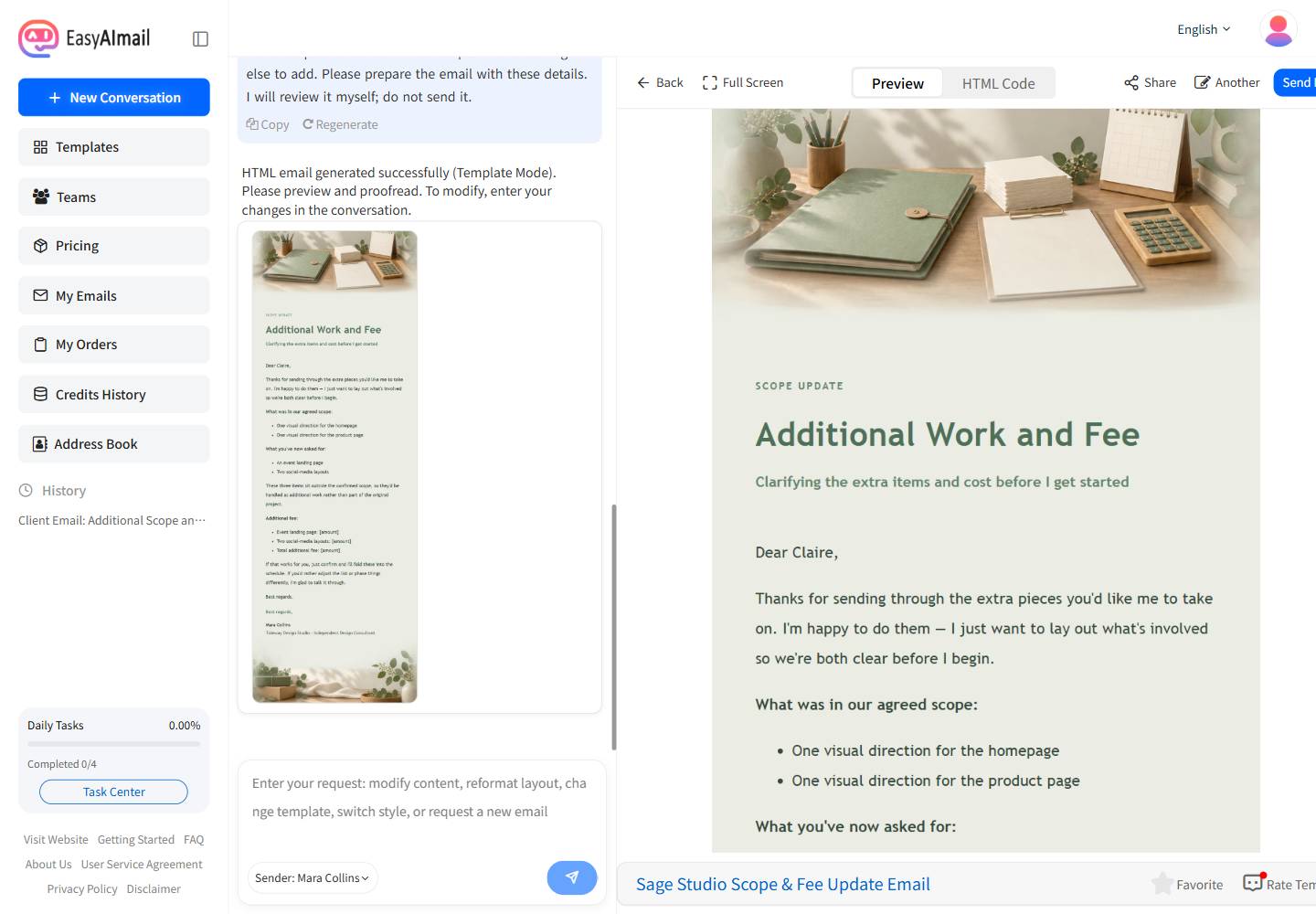
When a client asks, “Could we add this as well?”, the first tension is often not the extra work. It is the fear that one email about scope or money will make a good working relationship feel strained. So the request gets accepted first and discussed later. By then, the new work has quietly become part of the original plan.
That does not mean treating a client’s idea as a problem. Taking an added request seriously means making clear what it changes before work begins. Scope, price, and timing are not three stiff sentences. They turn a casual yes into an arrangement both people can understand.
Name the added work before the fee can feel fair
Clients are not usually upset by an additional fee in isolation. They are unsettled when they cannot see what it belongs to. If the original deliverables, the new request, and the adjusted schedule are blurred together, any number can feel arbitrary. Explaining the change first gives the price a reason to exist.
An added idea does not necessarily mean the client believes it was included all along. Often, they have only just seen how the project could become more complete. Putting the old agreement beside the new request helps both sides stop guessing. It is not a correction.
A tool should ask for facts, not set a price
In an EasyAImail conversation, a user can explain who the client is, what was agreed, what has been added, and whether a fee or revised timing is already known. AI can organize those details into a calm draft and ask for more when the scope or start condition is unclear.
It should not guess what the work is worth or decide that a request belongs inside an agreement. Smooth wording cannot replace commercial judgment. The sender still checks the real fee, delivery effect, and boundary they are prepared to hold before deciding whether to send.
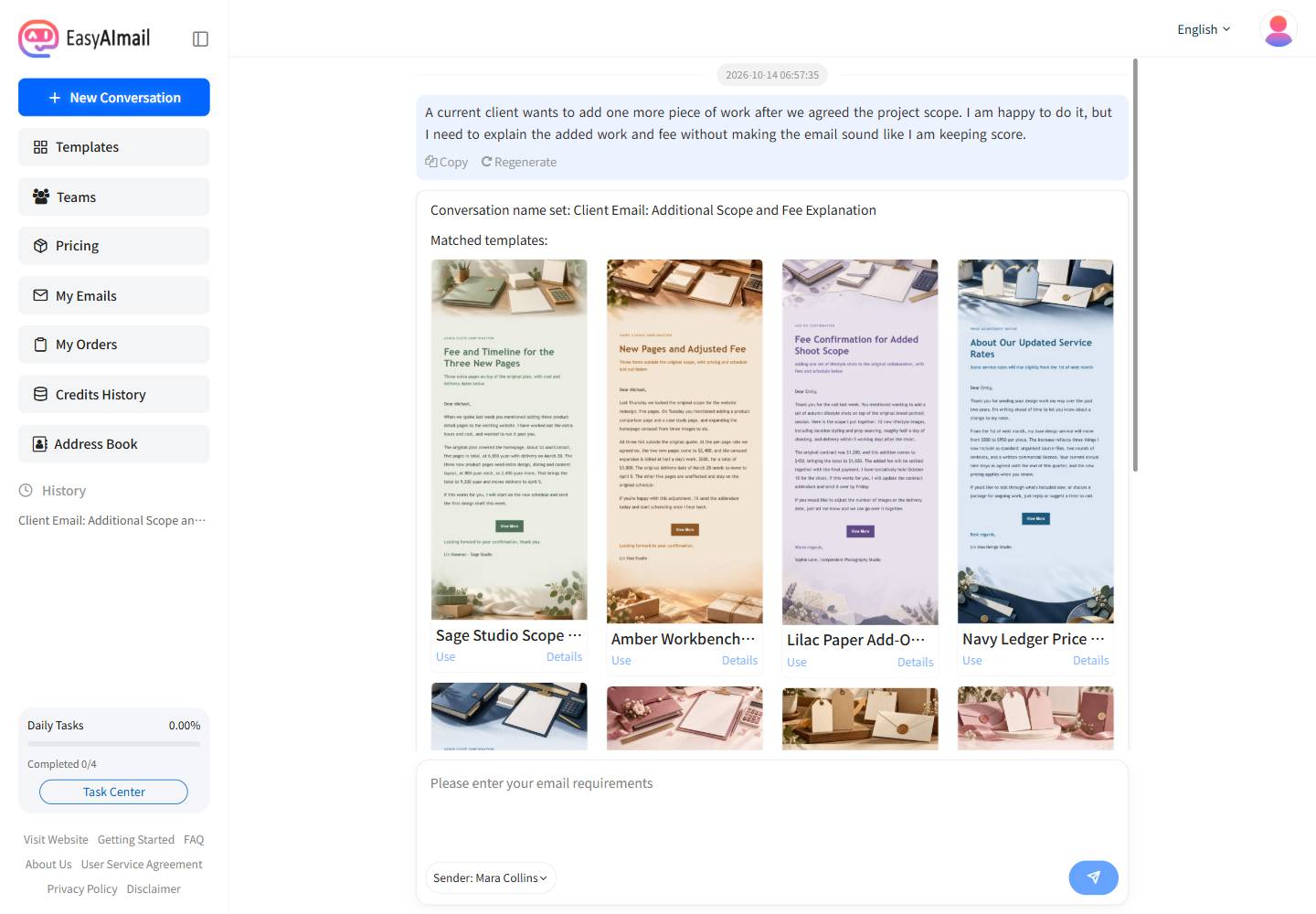
A clear confirmation leaves room to choose
A considerate note does not force an immediate yes, and it does not quietly begin the extra work before confirmation. It gives the client a real choice: add the work now, adjust part of it, or leave it for later. That pause is not cold. It makes the next piece of work easier to begin well.
For the practical structure of a scope, fee, and start-condition email, read how to tell a client extra work is outside the original scope. When added work changes the delivery date, use a separate client delay email to explain the revised plan. In either case, confirm the facts and decision before sending.