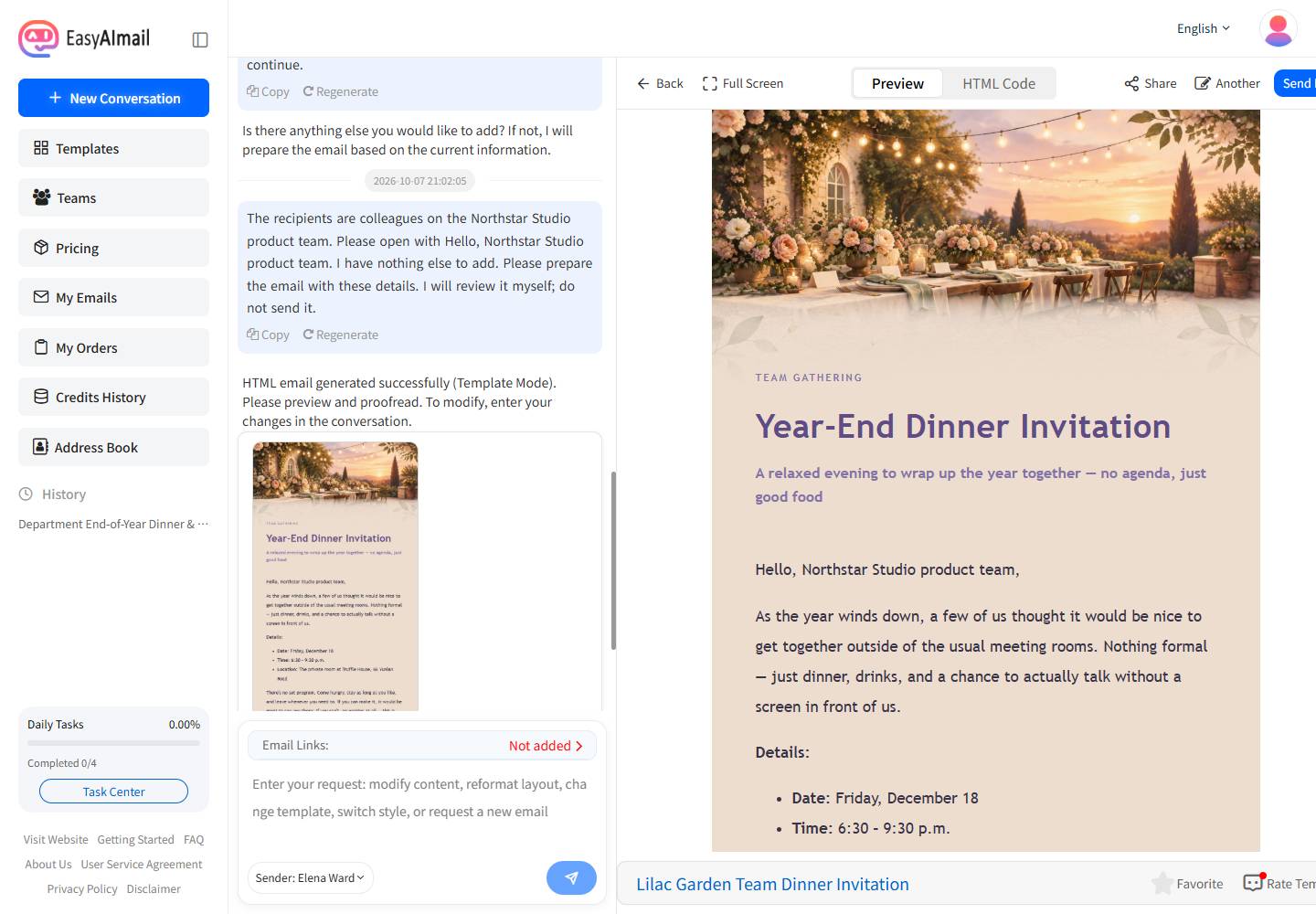
A team holiday invitation often carries two opposing expectations. Organizers want people to feel welcome, and they also need a headcount. Coworkers, meanwhile, may first wonder whether declining will look like a lack of team spirit, or whether an RSVP will be read as a statement about their commitment to work.
That pressure does not need a single harsh sentence to exist. It can live in phrases such as “full participation” or “we hope everyone will support the event.” For the organizer, this is an event notice. For the recipient, it may touch private plans, financial limits, caregiving responsibilities, or simply the right not to socialize beyond work.
A workplace invitation comes with a power difference
Among friends, declining an invitation is usually just a scheduling decision. Team invitations work differently. The sender, the people copied, and ordinary reporting relationships all change the weight of a sentence. Even when an event is described as optional, employees notice who initiated it, who is expected to attend, and whether a decline will remain visible.
That is why a tool should not read “team event” as an instruction to make the copy more enthusiastic or persuasive. The more useful draft recognizes the boundary and lets people choose without explaining private reasons. Warmth is not moving everyone toward the same answer. It is making the choice cost-free.
Name the purpose before arranging the holiday mood
In an EasyAImail conversation, an organizer can explain who will receive the email, what kind of event it is, what it needs to communicate, the intended tone, and which arrangements must remain exact. For a team invitation, whether attendance is voluntary, whether there is a formal portion, whether a reply is needed, and how dietary needs are handled all affect the tone. They are not details to paste in at the end.
Users can choose formal, friendly, or describe the feeling they want directly. AI can organize those conditions into a draft and avoid mechanical language, but it should not turn an event into a display of team loyalty. Only the organizer knows the real purpose of the gathering and can confirm that the wording matches the actual arrangement.
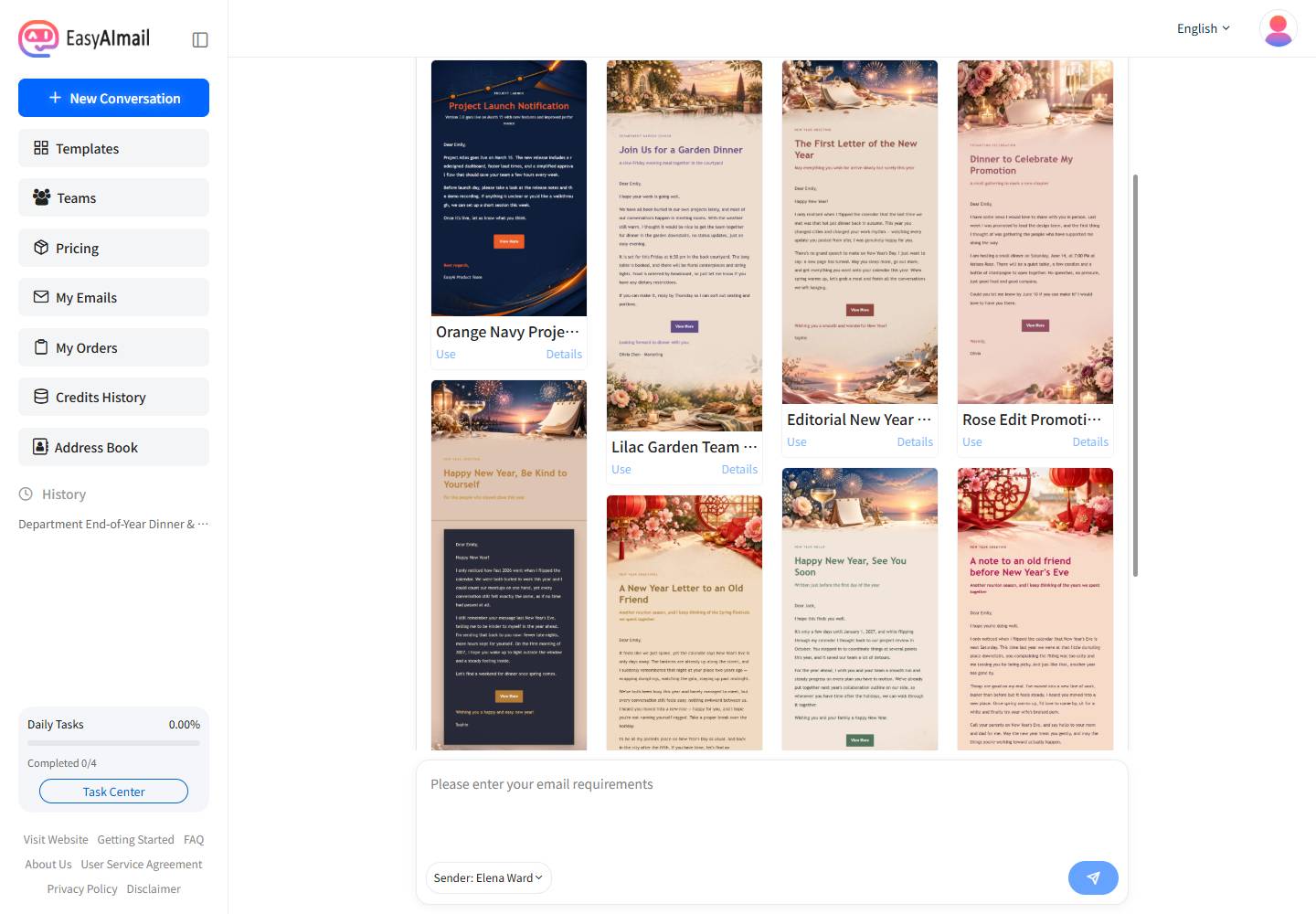
A template can signal welcome, not create obligation
A holiday template can keep an internal note from reading like a cold meeting announcement and make the time, place, and reply method easier to scan. But a celebratory look should not be used to conceal a participation expectation. The more formal or elaborate the layout, the more important it is to make sure it does not turn an ordinary gathering into something that appears compulsory.
That is why the user still reviews the template details and chooses the layout. A fitting team design leaves room for clear arrangements and a low-pressure close. It does not simply amplify the signal that everyone should be there.
Real inclusion lets coworkers opt out
A tool can help an organizer make the invitation clear and considerate, and it can prompt a final check of timing, venue, and recipient details. It cannot decide whether the team culture actually permits a no. If attendance is described as optional, people should not need to defend a decline, compensate for it, or be treated as less committed.
For the practical structure of a team invitation, read how to write a team holiday party invitation email. To compare visual approaches for different team relationships, browse the email template collection.