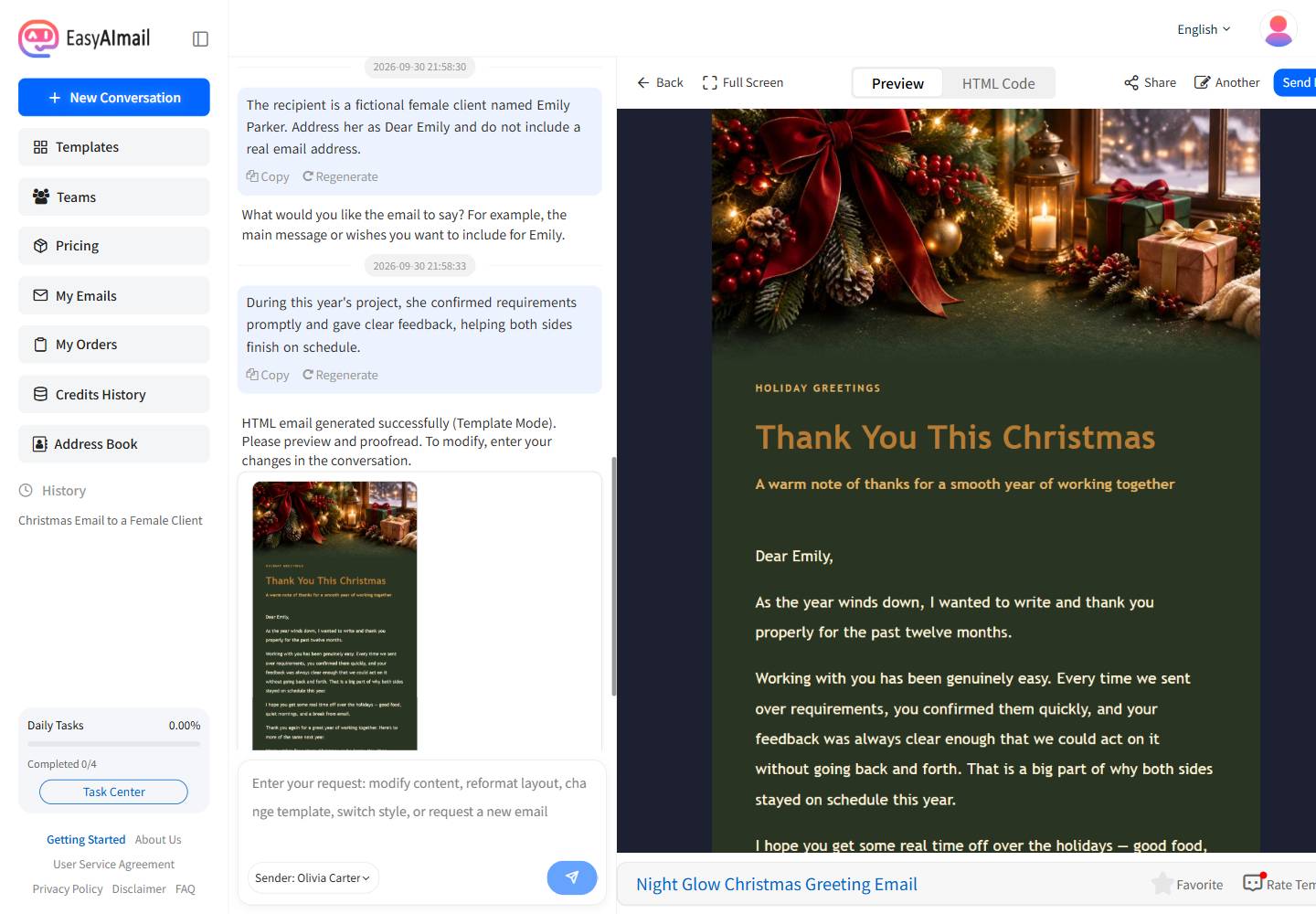
A year-end note to a client can easily become an opportunity to advance business at the same time. Add a sentence about a new service, a pricing link, or a request to talk after the break, and it can all seem natural. But when gratitude and a sales request sit in the same email, the gratitude can quickly look like setup.
That does not mean a holiday message must avoid work entirely. Client relationships are built through work. The boundary worth protecting is that the sender decides what this particular email is for: thanks, a greeting, or the start of the next commercial conversation. A tool should not merge those purposes into one default move.
A greeting is not a built-in sales opening
When recipients read a holiday note, they are often noticing how the relationship has been remembered. A real, accurate thank-you can communicate care. A product introduction, time-limited message, or meeting request immediately after it changes the center of the email. Even polite words can make the greeting feel like a reason to begin a pitch.
This matters even more with clients who are not in frequent contact. The more distance there is in a relationship, the more restraint it needs around assumptions of familiarity and commercial intent. A brief, clear note has not done less than an information-heavy email. It has simply not asked the holiday to carry an additional business task.
State the intent and facts before a tool can respect the boundary
In EasyAImail, a user can explain who the recipient is, where the collaboration stands, what they want to thank them for, whether they know the person celebrates Christmas, and whether the message needs to remain non-promotional. Here, “non-promotional” is not a small styling note. It is an intention that changes what belongs in the entire draft.
When the sender does not know whether the recipient celebrates Christmas, the tool should not make a cultural or religious assumption. The user can choose a more neutral year-end expression and personally confirm the salutation, collaboration facts, and tone. AI helps arrange known information; fluent wording should not hide what remains uncertain.
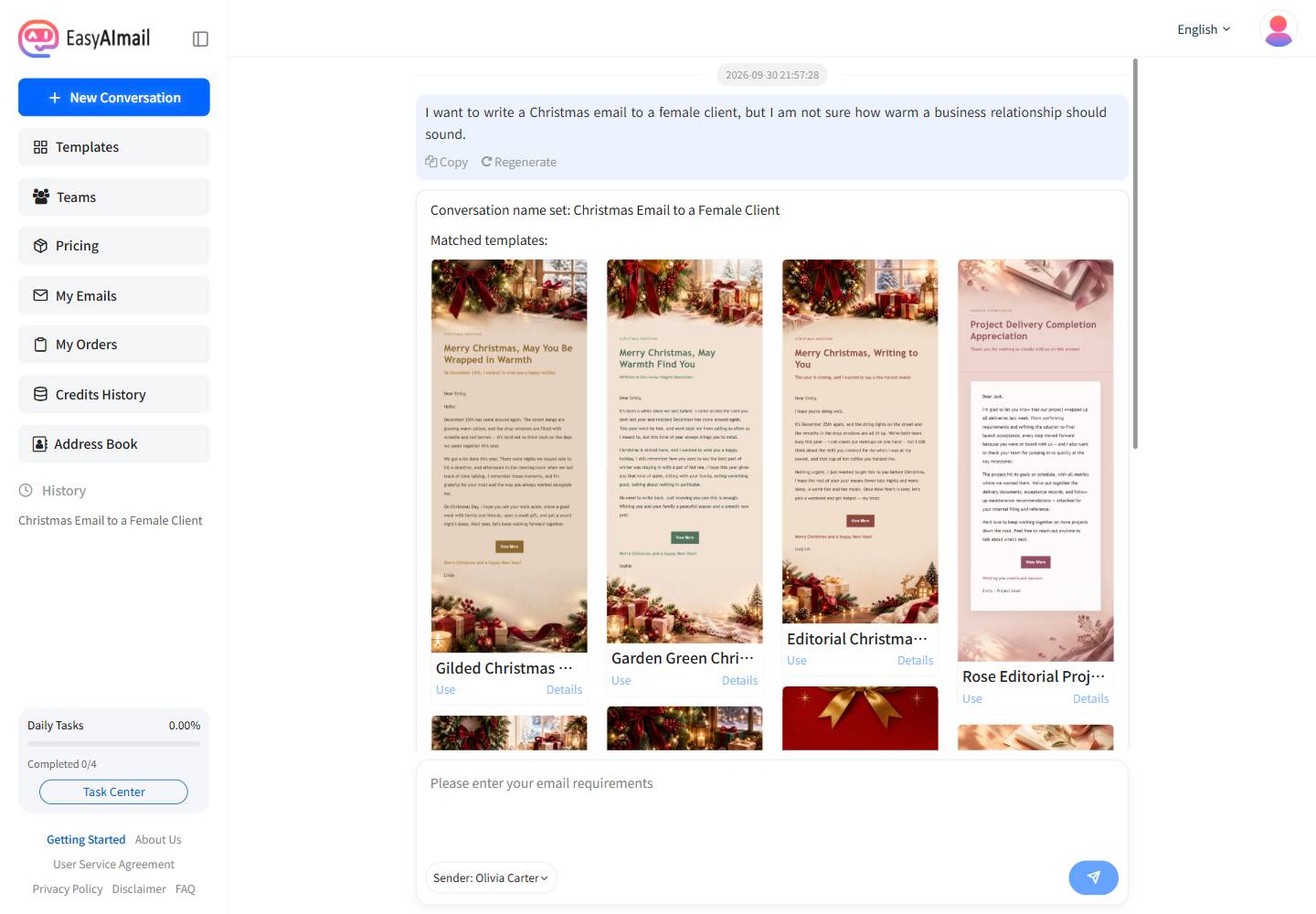
Visual restraint also communicates purpose
A holiday template can keep a business note from feeling sterile, but the visual treatment also suggests an email’s purpose. A prominent promotional button, too much campaign information, or an intimacy that does not fit the existing relationship can lead a recipient to read the note as a marketing touchpoint.
That is why a recommendation is not an automatic choice. A user can inspect a template and decide whether it leaves room for a concise thank-you and appropriate space. The template handles presentation; the sender remains responsible for the relationship the email is meant to sustain.
Let a greeting do only the work it is meant to do
Saving business follow-up for its appropriate moment does not reduce the value of a holiday message. It makes the thanks more believable. Before sending, the preview deserves another check for names, collaboration facts, salutations, and links, so that goodwill has not accidentally turned into pressure or a pitch.
For practical guidance on holiday emails to clients and colleagues, read Christmas email to a client or colleague. For situations where a direct Christmas greeting may not fit, see holiday greeting email.