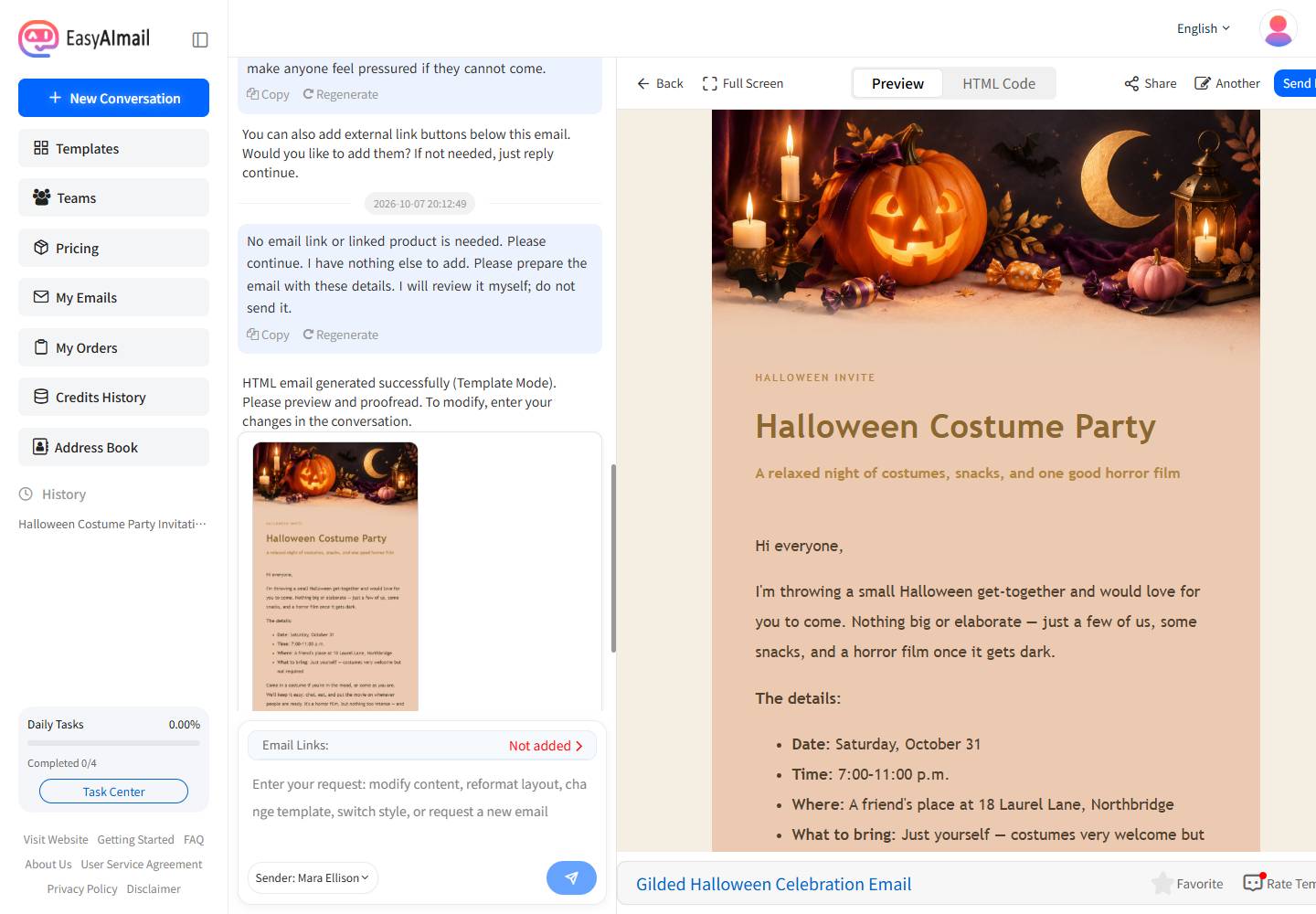
A Halloween theme can make an invitation look finished very quickly. Add a dark background, pumpkins, and bats, and the seasonal mood is already there. But the recipient is usually deciding something more practical: do I want to go, and will it feel comfortable to take part?
That is an easy distinction to miss in holiday email. Visuals can get attention, but they cannot answer the social questions behind an invitation. Will I know anyone? Is dressing up expected? What kind of gathering is this? Those questions shape whether an invitation feels considerate enough to act on.
Seasonal mood is not the same as belonging
A Halloween invitation can be playful and still leave people hesitant. The issue is rarely a lack of enthusiasm for the holiday. More often, the message presents a theme without making the experience of joining feel clear. Someone may wonder whether arriving without a full costume will feel awkward, or whether this is a small gathering of familiar people or an event that asks them to find their own place.
Those are not problems that better spooky adjectives can solve. They come from the relationship between people and the context of the event. A writing tool that reads “Halloween” only as a visual style can produce an email that feels festive while missing the human part of the invitation.
Understand the occasion before arranging the atmosphere
In an EasyAImail conversation, a user can explain who the email is for, the occasion, what they want to say, the desired tone, and any information that needs to remain exact. For a holiday invitation, the AI should take in that context before turning it into a draft someone can review. It should not expand “Halloween” into a default set of seasonal lines.
Tone is not limited to formal or casual. Users can choose formal, friendly, or describe the quality they want directly. With close friends, relaxed should not mean pressuring people to join. With coworkers or clients, seasonal warmth should not outrun the relationship that already exists.
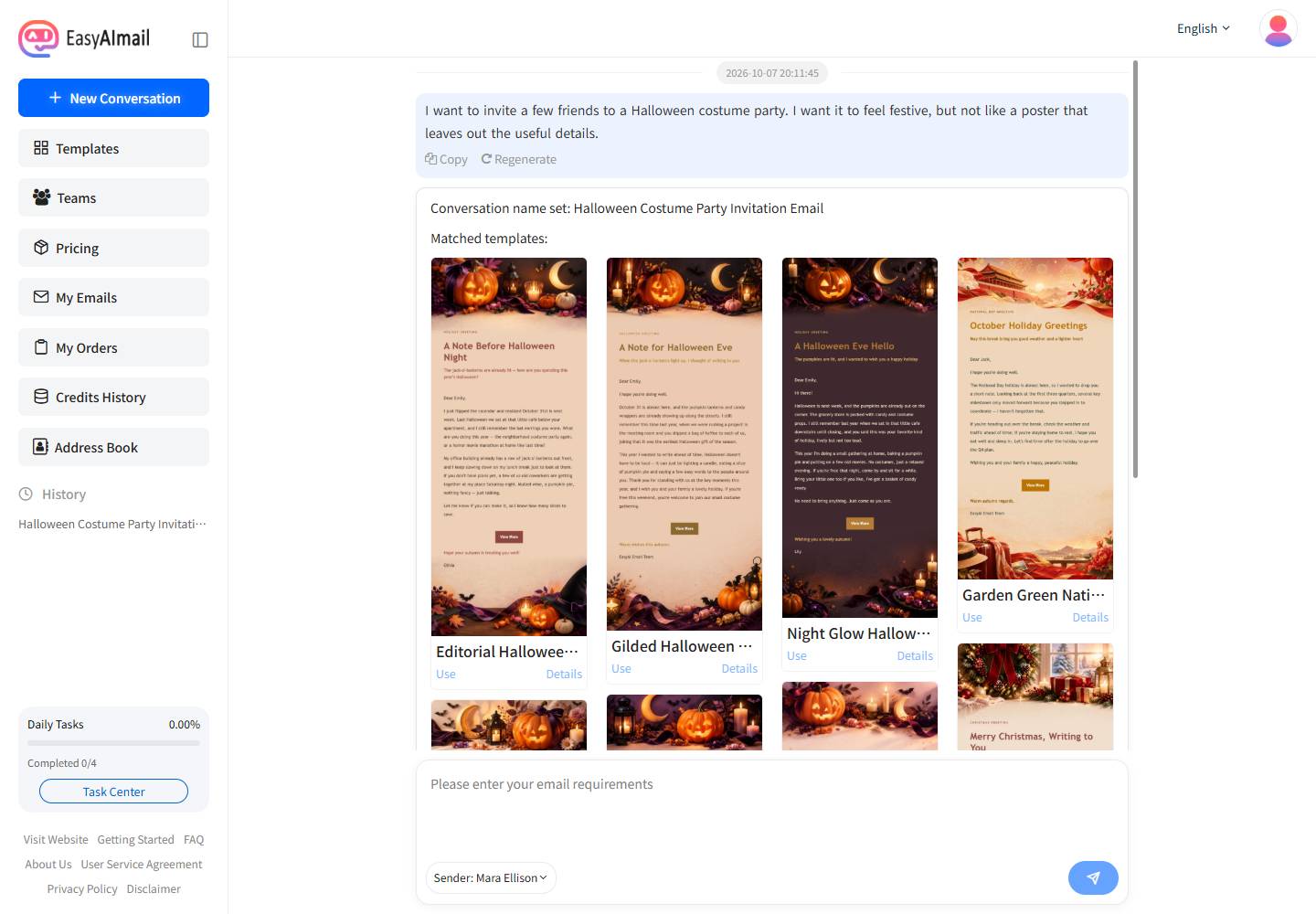
A template can set the look, not define the event
A template is useful because it gives the season a clear visual container. It can help readers recognize a Halloween email at a glance and give the writing some order. It should not decide how intimate the gathering is, how many people belong there, or how participation is meant to feel. It should not assume that everyone celebrates in the same way.
That is why template recommendations should still leave the choice with the user. Visual selection is part of expression, not an automatic definition of the event. A good layout leaves room for the facts and the tone instead of making every sentence serve the decoration.
The final judgment belongs to the host
AI can turn scattered thoughts into a more natural draft and is prompted to avoid language that sounds conspicuously generated. It cannot know who may feel excluded by a costume expectation, or decide how much freedom an invitation should offer its recipient. The preview is still worth reading personally before the host chooses whether to send it.
For the practical structure of an invitation, read how to write a Halloween party invitation email. To compare layouts for different situations, browse the email template collection.