
On the morning after an interview, many people open an email tool and ask not what they want to thank someone for, but whether it is already too late to send the note. That timing anxiety can quickly take over the message that a thank you email is actually meant to carry.
From the perspective of a writing tool, this is not a concern that should be answered with an automatic reassurance. The tool does not need to invent an explanation, and it should not make “sorry this is late” the default opening. It should help the user recover the detail from the conversation that is genuinely worth writing down.
Timing anxiety can take over the subject
In one test scenario, the interview happened yesterday afternoon and the user began drafting the next morning. The concern was not a lack of things to say. It was the fear of missing an invisible window.
Yet the value of a thank you note is not proving that the sender is perfectly punctual. It is showing that the note still belongs to the conversation that just happened. A real discussion point, thanks for the other person’s time, and continued interest in the role are usually closer to that purpose than explaining a gap of a few hours.
A tool should ask for a memory, not write an excuse
In an EasyAImail conversation, the user can state the concern first and then add the recipient, interview context, memorable discussion point, and desired tone. The point of that exchange is not to extract every detail at once. It is to give the tool material for a specific email.
When the only input is “write an interview thank you,” the result can easily return to filler that anyone could send. The one line that belongs to this interview still has to come from the user. A tool can place it clearly in the email. It cannot create it from nothing.
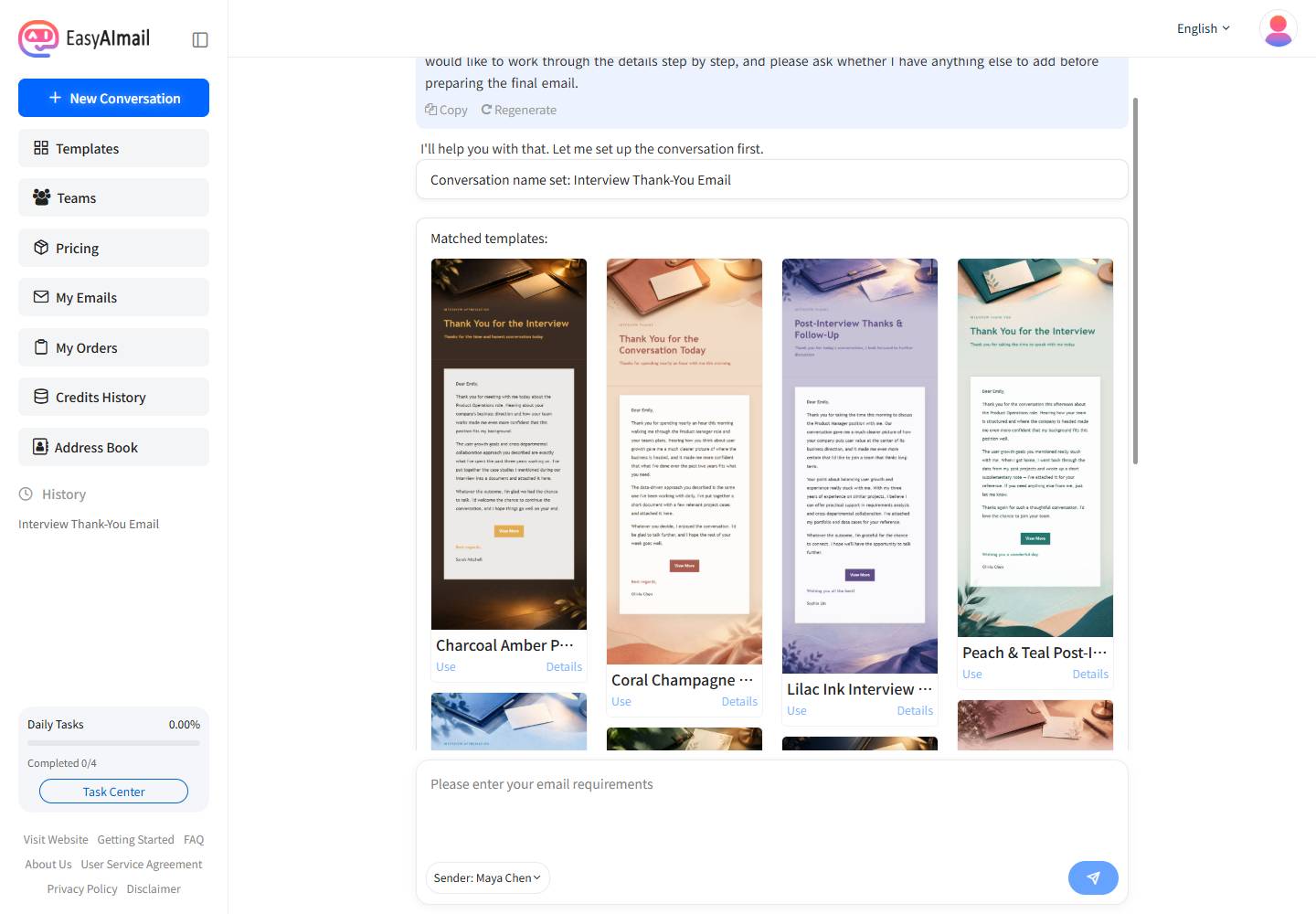
A template cannot prove sincerity
Once the facts and tone are clear, the user can inspect template details and choose how the message should be presented. A template can arrange the information so that thanks, the discussion detail, and continued interest are easy to read. It cannot make an email without personal content suddenly sincere.
That is why template selection belongs to the user. The tool knows structure. The user knows which memory belongs to this exchange and which expression suits the relationship. Together, they keep a thank you from becoming a formulaic task.
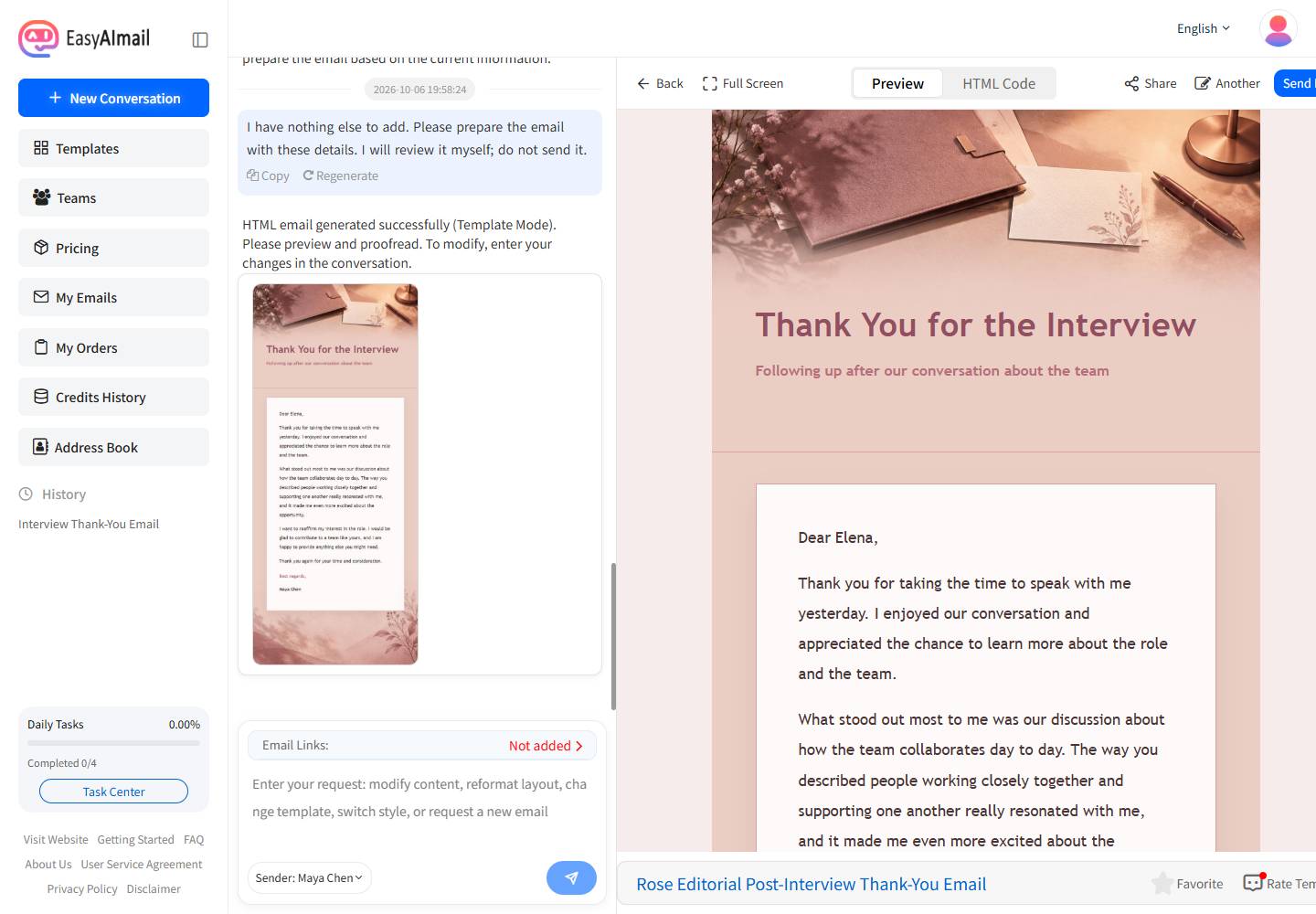
A generated email is still a draft to review
Before sending, the user still checks the name, role title, discussion detail, and whether the wording actually sounds like them. They also decide whether any process question belongs in a separate message. Generation can reduce the difficulty of starting from a blank page. It should not remove the final reading and judgment.
To explore structures for different situations, browse our email template collection. To learn more about evaluating facts, tone, and review in an AI writing tool, read our guide to choosing an AI email tool.